Auto Maintenance vs Auto Repair: What’s the Difference and Why Does It Matter?
If you’ve ever wondered whether your vehicle needs maintenance or repair, you’re not alone. Many drivers use these terms interchangeably — but they represent two very different aspects of vehicle care.
Understanding the distinction isn’t just semantics. It directly impacts
vehicle reliability, long-term costs, safety, and performance.
What’s the Difference Between Auto Maintenance and Auto Repair?
Simply put:
- Routine Maintenance =
Proactive Care
- Auto Repair =
Reactive Fixes
Maintenance is about preventing problems. Repair is about correcting problems after they occur. Both are essential — but they serve different roles in keeping your vehicle healthy.
What Is Routine Maintenance?
Routine maintenance refers to scheduled services designed to prevent breakdowns and component failure.
These services are performed based on:
- Mileage intervals
- Time intervals
- Manufacturer recommendations
- Vehicle usage conditions
Common Maintenance Services Include:
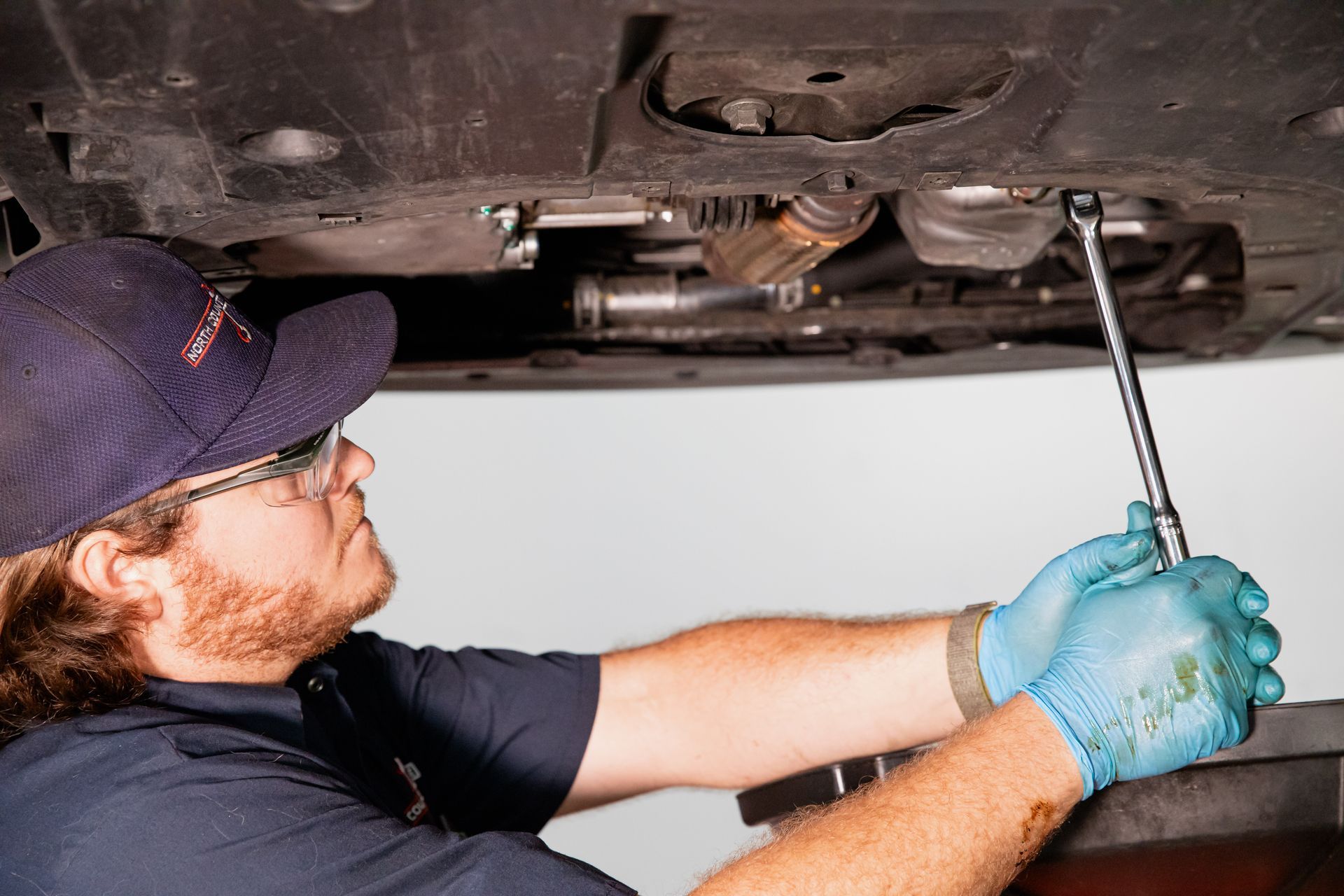
- Oil and filter changes
- Tire rotations
- Brake inspections
- Fluid checks and replacements
- Battery testing
- Belt and hose inspections
- Air filter replacement
Maintenance is fundamentally predictive and preventative.
The Goal:
✔ Reduce wear
✔ Detect early issues
✔ Extend vehicle lifespan
What Is Auto Repair?
Auto repair becomes necessary when a component has already failed, degraded, or malfunctioned.
Repairs address existing problems such as:
- Engine issues
- Transmission problems
- Brake failures
- Electrical faults
- Cooling system leaks
- Suspension damage
Repair is corrective by nature.
The Goal:
✔ Restore function
✔ Fix damage
✔ Resolve symptoms
Why Maintenance and Repair Are Closely Connected
Here’s where many drivers get caught off guard: Neglected maintenance often leads directly to expensive repairs.
Examples:
- Skipping oil changes → Engine wear or failure
- Ignoring brake inspections → Rotor and caliper damage
- Delaying fluid replacement → Transmission failure
- Avoiding tire rotation → Uneven wear and suspension stress
Maintenance reduces the probability of repair — but cannot eliminate it entirely.
Even well-maintained vehicles eventually require repairs due to:
- Normal wear and tear
- Environmental conditions
- Age-related component fatigue
Which One Saves You More Money?
Maintenance is almost always less expensive than repair.
Why?
Because maintenance:
✔ Addresses minor wear before failure
✔ Prevents secondary damage
✔ Preserves component efficiency
✔ Avoids catastrophic breakdowns
Repairs often involve:
✖ Part replacement
✖ Labor-intensive diagnostics
✖ Collateral system damage
Why Proactive Care Matters
Routine maintenance provides:
- Improved reliability
- Better fuel efficiency
- Increased safety
- Longer vehicle lifespan
- Lower long-term ownership costs
Repair ensures:
- Functional restoration
- Safe operation
- Performance recovery
Skipping either creates risk.
How Drivers Can Stay Ahead of Repairs
Smart vehicle care strategy:
✔ Follow manufacturer maintenance schedules
✔ Address warning lights immediately
✔ Pay attention to unusual noises or behavior
✔ Schedule inspections regularly
✔ Work with a trusted service provider
Vehicles rarely fail “without warning.”
Symptoms usually develop first.
The Bottom Line
Routine maintenance and auto repair are not competing concepts — they are complementary components of responsible vehicle ownership.
Maintenance prevents many problems. Repair resolves unavoidable ones.